Stigmata Book Chapter
30 December 2022
Biography of an Arab female body in pain
This chapter discusses the subject of the female body through the lens of close reflection upon the author’s performance/directing journey from both personal and cultural perspectives. It emphasizes the politics surrounding their practice as a Palestinian female artist (Arab Israeli) living on the margin (in London). It addresses the following questions: What are the limitations surrounding this practice? How can personal pain, as an element of live performance, help in challenging cultural taboos and furthermore help in healing throughout the pedagogical course? How can artists’ creative practice help with giving voice to personal pain? To what extent could the teaching process facilitate sharing pain? What could other trainees gain from this process? Personal and ethical considerations of the author’s extensive body of performance are employed alongside similar considerations of their work as a director of their recent play in Belgium, The Place to Be.
Description
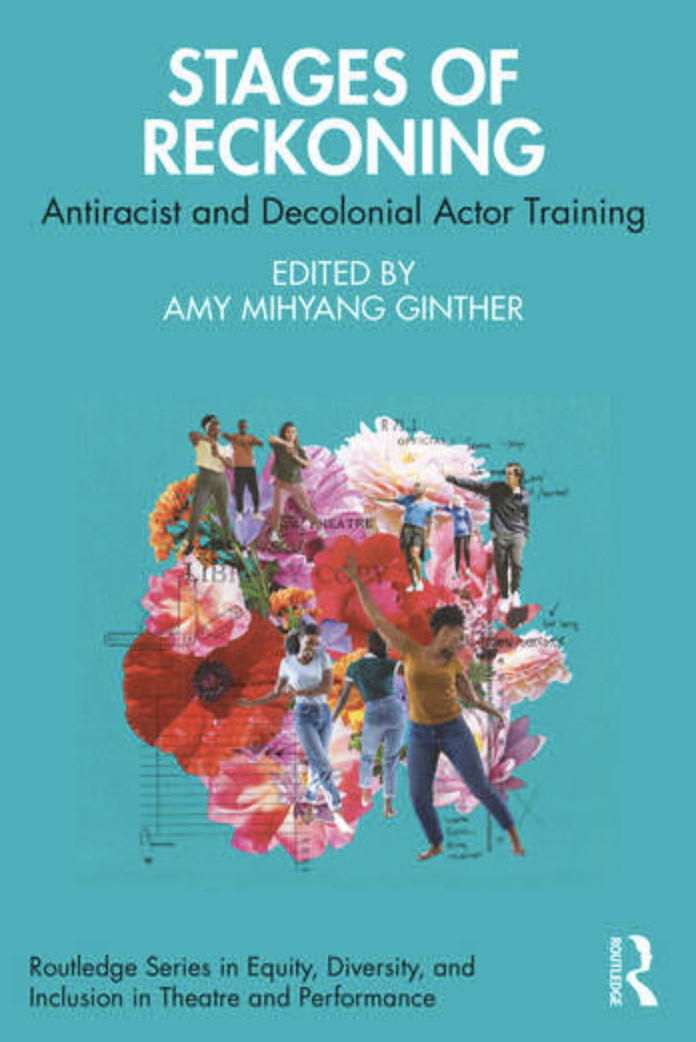
Stages of Reckoning is a crucial conversation about how racialized bodies and power intersect within actor training spaces.
This book provokes embodied and intellectual discomfort for the reader to take risks with their ideologies, identities, and practices and to make new pedagogical choices for students with racialized identities. Centering the voices of actor trainers of color to acknowledge their personal experience and professional pedagogy as theory, this volume illuminates actionable ideas for text work, casting, voice, consent practices, and movement while offering decolonial approaches to current Eurocentric methods. These offerings invite the reader to create spaces where students can bring more of themselves, their communities, and their stories into their training and as fodder for performance making that will lead to a more just world.
This book is for people in high/secondary schools, higher education, and private training studios who wish to teach and direct actors of color in ways that more fully honor their multiple identities.